Michael Jacksons Voice and Singing Techniques
Michael Jacksons Voice
An in-depth technical analysis for the true MJ fan
The Human Instrument: Decoding the Vocal Genius of Michael Jackson
Before your eyes lies the most sophisticated instrument in music history: Michael Jackson’s voice. From the science of his "mixed voice", beatboxing and rhythmic "hiccups" to the groundbreaking use of ingressive phonation and the "cello-like" resonance of his humming.
Michael Jacksons singing was an artform.
The Golden Essence of Michael Jacksons voice
His Soul Within the Sound
Most humans can only speak while exhaling, but Michael mastered the art of the ‘eternal breath.’ By turning his inhalations into rhythmic gasps, the ‘huv’ and the ‘hic’, he eliminated the silence where a singer usually stops for air, creating a driving, continuous loop of sound that felt like a heartbeat that refused to stop.
To the musician and the devoted fan, Michael Jackson was more than a human instrument.
Michael Jackson did not just sing songs; he engineered them with his vocal cords. While many vocalists can hit a high note or carry a tune, Michael possessed a “vocal thumbprint” so unique that it remains practically impossible to replicate. The “Golden Essence” of his talent lies in his ability to be simultaneously a drummer, a storyteller, and a conduit for raw, unshielded emotion.
Whether he was humming a simple melody in a demo like “Changes”—where his voice resonates with the warmth of a cello—or “belting” a high Bb4 in “Earth Song” with enough power to shake a stadium, his voice was a masterclass in control and texture.
He made the most complex techniques sound completely effortless; where other singers showed the “work” behind the note, Michael showed only the feeling.
PART 1: The Technical Architecture – Engineering the Sound
Michael Jackson’s voice was the ultimate refined human instrument: a flawlessly calibrated voice capable of impossible speed and precision, and a raw, bleeding heart that could burst at any moment. He was the instrument, the drummer, and the soul, all at the same time.
Michael Jackson’s vocal identity was built on a foundation of almost “impossible” mechanics.
Michael Jackson’s voice was a flawlessly calibrated force of speed, precision, rhythmic power, and emotional transparency, all moving as one. He was the instrument, the drummer, and the soul all at the same time.
Michael Jackson’s vocal identity was built on a foundation of unique mechanics. He didn’t just manipulate pitch; he manipulated air, attack, resonance, beat, and rhythm to shape a sound that felt alive, physical, and immediate.
1. The Science of the “Mixed Voice”: Power Without Strain
One of the most extraordinary things about Michael’s singing is how high he could go without the voice sounding weak or detached.
The Invisible Bridge: Most male singers reach a point where the voice starts to thin out as it rises. Michael developed a Mixed Voice that stayed unusually connected, allowing him to sing the highest notes while still carrying the weight and “punch” of his chest register.
The Bb4 Power-House: When you hear the massive “What about us!” in Earth Song, he isn’t using a weak falsetto. He is using a powerful, connected mixed voice. In one published arrangement, the vocal line in Earth Song reaches as high as D♭6, showing that his dramatic upper register was a real part of his musical language.
Effortless Execution: Perhaps his most impressive feat was the lack of visible strain. While other “power singers” might get red-faced, Michael delivered these skyscraper notes with remarkably little visible tension, making the “impossible” look like a casual conversation.
2. Ingressive Phonation: The “Eternal Breath”
This is perhaps one of the most unusual aspects of Michael’s vocal style. He often used inhaled sounds, gasps, and breath attacks in a way that made the line feel urgent, continuous, and rhythmically alive.
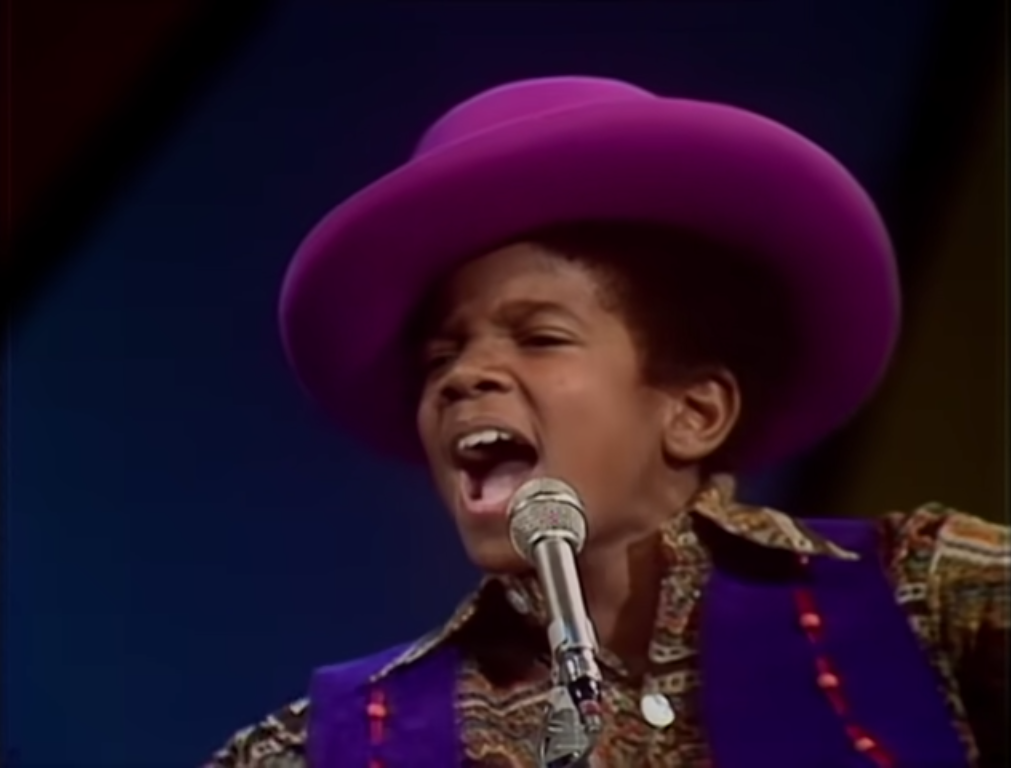
The “Huv” Engine: Even as a child in “Who’s Lovin’ You”, he used sharp gasps and inhaled attacks just before major lines. These sounds helped create explosive entry, dramatic attack, and emotional momentum rather than functioning like empty breaths between phrases.
Eliminating the Gap: By turning breaths, gasps, and inhaled sounds into part of the groove, Michael reduced the feeling of interruption between phrases. His breathing often felt built into the rhythm rather than separated from it.
3. Rhythmic Percussion: The “Vocal Hiccup”
Michael popularized the use of glottal attacks—those iconic “hiccups.”
The Snare of the Throat: These sounds weren’t random “ticks.” They were rhythmic punctuation marks. They acted as a snare drum or a hi-hat, providing a rhythmic “kick” that drove the groove of songs like “Billie Jean” or “Smooth Criminal”.
Micro-timing: He used these stops to “bite” into the rhythm, shifting a word by a fraction of a second to create a “swing” that made his vocals feel alive and danceable.
4. The One-Man Orchestra: Advanced Beatboxing
Michael’s beatboxing, as seen in the Oprah or Diane Sawyer interviews, is fundamentally different from “professional” beatboxers because he approached it as a composer. Publicly available commentary on his songwriting process also points to his use of vocal sketching and beatboxing to shape rhythm, pulse, and song structure before a track was fully built.
Simultaneous Multi-tracking: In a single live take, Michael could suggest bass movement, rhythmic attack, pulse, and vocal shape at the same time while still preserving the unmistakable presence of the human voice.
Organic Texture: His percussive sounds felt bodily, “wet,” and alive. He didn’t just mimic drums; he “spoke” the rhythm through breath, mouth, body, and vocal instinct.
5. The “Cello” Resonance: The Beauty of the Hum
Why is Michael’s voice so “pleasing” to the ear, even when he isn’t singing words?
Mask Placement: Michael’s tone often feels placed forward, which gives it a piercing clarity.
The Humming Phenomenon: When he hummed, the sound took on a rich, vibrating warmth that many listeners experience as cello-like. This is why quieter vocal moments can sound so “full,” deep, and emotionally textured.
6. The Controlled “Break”: Heartbreak as a Tool
Michael’s greatest artistic gift was knowing when to be intentionally imperfect.
The Sobbing Technique: Borrowing from Soul and Gospel, he would purposely let his voice “crack” or “break” at the climax of a phrase.
When the Heart Bristles: This “vocal sob” made his performances feel devastatingly real. He wasn’t just hitting notes; he was “sounding like pain.” By allowing his voice to shiver or break, he made the listener feel as though his heart was literally breaking in the recording booth.
Michael isn’t just hitting a high Bb4 in a climactic lead-in during Earth Song; he is “distorting” the tone on purpose to create a sound of pure emotion.


The Essence of MJ Singing
PART 2: The Stylistic Mastermind
Michael Jackson’s voice was a symphony of complexity and variation:
When beatboxing, it was a perfectly calibrated human machine capable of impossible precision, yet it remained a raw, bleeding heart that could break at any moment.
He was the instrument, the drummer, and the soul all at once.
His ability to manipulate sound, rhythm, and emotion through “micro-variations” and “vocal breaks” created a sound that could be both “wonderful” and “full of grief and tragedy” at the same time”, measured in intensity and emotional feelings .
One of the most remarkable things about Michael’s voice is its inherent “pleasantness”. This isn’t accidental; it’s a result of how he managed his energy.
Michael Jackson was perhaps the most rhythmic singer in the history of popular music. He didn’t just sing over a beat; he was the beat.
Vocal Percussion Beyond Beatboxing: His style was built on “attacking” words. He used hard consonants as drum hits and his breath as a hi-hat. This created a “staccato” energy that made his vocals incredibly danceable.
Michael’s true magic lay in his ability to change his vocal “face” to match the genre or the mood.
From “grit” to “glow”: He could transition from a raw, “dirty” rock rasp (the “grit”) to a crystal-clear, angelic tone in a single measure. This versatility allowed him to dominate Soul, Rock, Pop, and R&B simultaneously.
Michael was the ultimate enemy of the “copy-paste” vocal. He understood that the human ear gets bored with repetition.
Whether he was 11 or 50, Michael’s voice carried a weight of an” adult soul.”


Vocal range with power
PART 3: Michael Jacksons Vocal Range
In MJ’s world, the voice wasn’t just for the tones, it was the lead drum, the bass synth, the melody, the message, and the emotional climax all at once. Micchael Jacksons singing was an artform.
- The Green Bar (Tessitura): This is MJ’s “Home Base.” Most of his verses and choruses live here. It’s where he had the most control and “flavor.” He chose to sing in this high tenor area because it cut through the heavy bass and drums of 80s/90s production.
- The Red Bar (Total Range): This shows his extreme capabilities.
- The Low End (E2-G3): He had these notes, but they were often too “heavy” for his pop style, so he saved them for special effects (like the deep growls in Thriller).
- MJs lowest end: (C2-G1)
- The High End (Bb4-B5): This is the High Range. He only went here for emotional peaks or ad-libs. Singing here is like “sprinting”, you can do it for a few seconds.
- High notes: (D5) MJ hits a D5 headvoice note in “We are the World”: “We’re saving our own lives” (“It’s true weĺl make a”… goes into chestvoice again).
- Key Insight: Michael Jackson’s “Normal” range was higher than most men’s “High” range. That is why his music is so notoriously difficult for others to sing.

PART 4: How low could Michael Jackson sing?
Seth Riggs (vocal trainer) “I was with Michael for 32 years he was a very gentle soul he was a Real Genius as far as moving his body was concerned as far as his voice was concerned he had a range of 3 1/2 octaves and it was all connected. It was, he could use falsetto or not use falsette. He just was a vastly talented person. “
Seth Riggs (vocal trainer) “I would say that when his larynx didn’t go up, he was able to vocalize down to a low C, a basso low C. I can’t even belch that low, but he could go down there! He always could go down to E-flat, which the bass sings in ‘Die Zauberflöte.’ It was amazing.”

Michael Jacksons Deep Voice
- C2 (Basso Low C): This is the note Seth Riggs specifically praised Michael for hitting. It is two octaves below Middle C. While MJ rarely used it in songs, Riggs used it in training to ensure Michael’s larynx stayed low and relaxed.
- E2: This is the note where his “supported” low range typically ended.
- G1: It is often cited as MJs absolute lowest “vocal fry” sound.
PART 5: How High could Michael Jackson sing?
Seth Riggs (vocal trainer) says MJ could sing up to E-flats and Gs above high C.
Michael Jacksons High Tenor Voice
- The vocal coach Seth Riggs:
MJ could sing high notes to E-flats and Gs above high C.
- Published sheet music:
Official arrangements help document Michael’s usable performed range in specific songs. For example, one published arrangement of Earth Song lists a vocal span of G♭4 to D♭6, showing that upper-register singing was a real part of his repertoire.
PART 6 The Difference: Weak Falsetto vs. MJ’s "Connected" Power
Most professional male singers often flip into a breathy, thin falsetto when they go high. It sounds “small” and lacks impact. Michael Jackson was different because of his Mixed Voice
Many male singers often stays in a very safe, linear lane. To a fan of MJ’s dynamic range, that feels uninspired. Michael was a perfectionist who obsessed over every millisecond of a vocal take to ensure it had “energy.”
“The true magic of Michael Jackson didn’t just lie in a single technique—it was the frequency he lived in. Vocal coaches can analyze his resonance and fans can count his octaves, but there is a ‘shimmer’ in his voice that science cannot quantify. It was a magnetic quality that felt ‘plugged into’ something supernatural; a three-dimensional frequency that existed even in his plain, natural tone. He didn’t just hit notes—he occupied them, turning his voice into a spiritual conduit that we simply feel, experience, and love.”
Final reflections on Michael Jacksons voice
“The true magic of Michael Jackson didn’t just lie in a single technique—it was the frequency he lived in. Vocal coaches can analyze his resonance and fans can count his octaves, but there is a ‘shimmer’ in his voice that science cannot quantify. It was a magnetic quality that felt ‘plugged into’ something supernatural; a three-dimensional frequency that existed even in his plain, natural tone. He didn’t just hit notes—he occupied them, turning his voice into a spiritual conduit that we simply feel, experience, and love.”
Michael Jackson didn’t just sing songs; he surrendered his entire being to the frequency of the music. While the world marveled at his octaves and his technical precision, Michael was busy engineering his voice into a high-tensile tool for a much greater purpose—it was the tool he chose to master in order to reach the heart of humanity. He used every octave, every breath, and every ‘supernatural’ frequency of his being as a conduit to create love. To listen to him is to stop analyzing the notes and start experiencing the frequency of a genius who didn’t just sing for the world, but for the soul of everyone in it.”

“
Michael Jackson the king of pop, music, and entertainment